How to Leverage AI in Email Marketing: From Personalization to Engagement and Conversions


Key Takeaways
- The era of static automation is finally over. “If this, then that” logic doesn’t apply, and AI is adapting to customer behavior in real time.
- Personalization goes way beyond just using {first_name}. AI email marketing tools send uniquely different content to different subscribers on a single list.
- Segmentation gets smarter, not just more detailed. AI targets real intent signals instead of standard filters like industry or geography.
- Content creation is not the bottleneck anymore. AI email marketing tools can generate dozens of subject lines and full sequences in one pass, not one draft at a time.
- Content creation is not the bottleneck anymore. AI email marketing tools can generate dozens of subject lines and full sequences in one pass, not one draft at a time.
- Deliverability now can be entrusted to AI. AI email marketing tools with built-in predictive checks catch spam triggers early, lifting inbox placement by roughly 31%.
- AI-powered emails drive 41% higher revenue and 13% higher click-through rates than manual campaigns.
- AI for email marketing isn’t foolproof yet. Human supervision is still needed. Feed it bad data or skip the final review, and even the smartest automation can work against you.
Dripify is a reliable tool that leverages AI in email marketing, combining AI-driven cold email with LinkedIn-based personalization in one workflow, so every takeaway above isn’t just theory; it’s something you can actually run.

For years, email marketing has been a game of judgment calls. You scratched your head over a subject line, wrote a cookie-cutter copy, and sent it to all your leads at one fixed time.
Contents:
In 2026 and beyond, that model of email marketing is no longer valid.
The problem with traditional email triggers is that they’re based on generic, preset signals, not what’s actually relevant to the recipient. The messages tend to be disjointed or ill-timed, making it more difficult to develop relationships that can translate to sales.
That’s exactly why AI for email marketing is gaining ground fast with sales reps, business owners, and teams under pressure to hit big quotas.
Still not benefiting from it? What a shame! You’ve come to the right post to understand how to leverage AI in your email marketing campaigns and see the difference in conversions and sales.
What Is AI-Powered Email Marketing?
AI-powered email marketing uses machine learning to automate, optimize, and personalize your outreach. It tracks your recipients’ behavior and dynamically changes your emails based on what it learns from their ways.
But how is AI different from typical email automation?
Well, traditional email automation is rule-based; it follows the logic of “if this, then that.” Say you send a welcome email to anyone who signs up. If they clicked on the link you enclosed (very basic scenario), you’d send them a follow-up.
Although this approach completes the task of outreaching and, on some level, interacting with the prospect, one thing doesn’t change: such campaigns do not adjust to shifting audience behavior. At all.
AI brings in a more adaptable model. AI-powered email marketing predicts what works best with a certain prospect by analyzing engagement signals and learning from data trends. And it becomes possible without ongoing human assistance.
AI email marketing tools can:
- Create campaign copy with multiple audiences in mind.
- Segment leads based on changing behavior.
- Customize outreach in ways that go beyond basic variables.
- Increase open rates by scheduling send times.
- Make predictions about purchase probability or churn risk.
Good to know:
AI doesn’t just automate your outreach; it continuously learns and adjusts it, and that adaptability quietly compounds into stronger sales results, not just better-performing emails.
 Good to know:
Why AI-Powered Email Marketing Is a Must for Sales in 2026
Email sales are no longer as easy as they once were. Everyone is vying for the same three seconds in a stuffed inbox; buyers are pickier, and attention spans are shorter.
Overworked salespeople won’t put up a fight; instead, they’ll let AI email marketing tools handle it for them. In 2026, you can easily delegate copywriting, testing, segmentation, scheduling, brand consistency, and other monotonous tasks to AI.
Stats Don’t Lie
You might be wondering, is the AI hype real? Recent data shows that yes, AI-based email marketing improves performance on almost every metric that matters to sales teams.
Take revenue, for instance. AI-powered email marketing generates 41% more income than manual campaigns, according to a Salesforce benchmark. This finding is consistent with several industry reports from 2026.
That same advantage shows up in customer engagement: AI-based campaigns have 13% higher click-through rates than traditional ones, implying that more of your prospects are clicking through rather than simply opening and scrolling past.
Finally, time is the cornerstone, not just outcomes. By automating tasks like list-building, copywriting, and campaign babysitting, marketing teams may save an average of 11 hours per week, which translates to nearly an additional workday. This ramps up productivity by 44%, which is not peanuts either.
Complex Personalization
Back in the day, sellers would insert simple variables like first name/company name into the subject line to make an email feel “personal.” It did the job until buyers caught on.
AI in email marketing reads clicks, browsing behavior, purchase history, and engagement patterns. Based on the findings, it creates surprisingly spot-on messages.
Here’s what that looks like in practice: within a single campaign, one subscriber might receive educational content, while another gets a product recommendation or a limited-time offer. This type of personalizing gives the impression of being natural and not forced, even when YOU KNOW IT IS.
Good to know:
The major advantage is that you can work from a single prospect list throughout the whole process. Artificial intelligence will simply scan the signals that each prospect sends and then modify the copy. No need to create different campaigns for each segment.
Smarter Segmentation
Behavioral segmentation, as you can imagine, is one source of better personalization.
Up until recently, salespeople would mark potential customers according to factors like industry, firm size, and geo. Filters like these are still okay for list organization, but they almost never catch buyers’ actual intentions.
On the plus side, AI in email marketing checks engagement signals to track hidden groups that are more likely to convert. For example, AI email marketing software can identify people who viewed prices but did not start a trial, as well as customers who are likely to buy again, and then personalize outreach based on legit data, not assumptions.
Advanced Content Creation
One of the most practical uses of generative AI in email marketing is content creation. Writing campaigns, catchy subject lines, follow-ups, and nurture sequences manually takes a long time, especially when marketers have to blast multiple versions for testing.
With AI in email marketing, the blank page disappears; subject lines arrive by the dozen. Nurture sequences are drafted whole, not one email at a time. Tone bends per buyer, formal to casual, without a rewrite.
Testing stops being A vs. B and starts being five variants at once. Your pitches adjust to job title, funnel stage, and history on their own. And across markets, tone travels with the language; no more stiff “translations” from Google Translate.
Improved Deliverability With AI Spam Scoring
AI email marketing tools triple deliverability through inbox placement analysis. Before you hit send, predictive analytics flag problems in advance, from formatting errors to dangerous links or trigger phrases.
The payoff is measurable: businesses using AI-based spam detection and deliverability optimization have seen inbox placement improve by 31%, all thanks to catching early what would otherwise tank their sender reputation.
How to Sell More With Dripify’s AI-Powered Email Marketing
Dripify is a LinkedIn automation & cold email software that integrates AI into the sales process. It helps you find prospects, engage with them on LinkedIn, email them, and personalize both LinkedIn & email campaigns without having to do it all manually.
Below are a few ways you can use Dripify’s AI skills to turn more cold emails into sales discussions.
Find & Verify Emails Before You Send
AI can help you produce personalized copy fast, but pushing more volume without verifying the underlying email data just means a higher bounce rate.
Dripify’s Email Finder uses AI to locate prospects’ business emails, then runs every address through its built-in Email Verifier before it ever touches a campaign (around 98% accuracy) and keeps your domain protected.

By handling discovery and verification in one workflow, Dripify also saves you from bouncing between separate prospecting, verification, and sending tools.
Make Every Email Feel Personal
AI in email marketing makes writing per se faster. Personalization is what keeps that speed from becoming hundreds of identical emails.
With that in mind, Dripify combines 19 email personalization variables with automation, weaving prospect-specific details directly into every message.
Your emails aren’t limited to plain text, either. Format up to 1,000 characters of copy, fine-tune the subject line, add clickable links, and preview everything before it goes out so you know exactly what lands in your prospect’s inbox.

Time Your Emails Right
Nobody’s excited about a great offer that shows up while they’re mid-meeting, mid-dinner, or mid-anything-else.
Dripify allows you to set email delays so that follow-ups do not overwhelm a prospect’s inbox and each message has some breathing room.

You can also define Working Hours for your outreach campaign, choosing the days and time windows when campaign activity should run. This applies whether you’re running an email-focused sequence or mixing email with LinkedIn touchpoints.

Use Conditions to Create Smarter Email Paths
Not every lead should automatically enter the exact same sequence. Dripify supports workflow conditions and branching, so email can enter the campaign when it actually makes sense.
A simple example is email discovery:
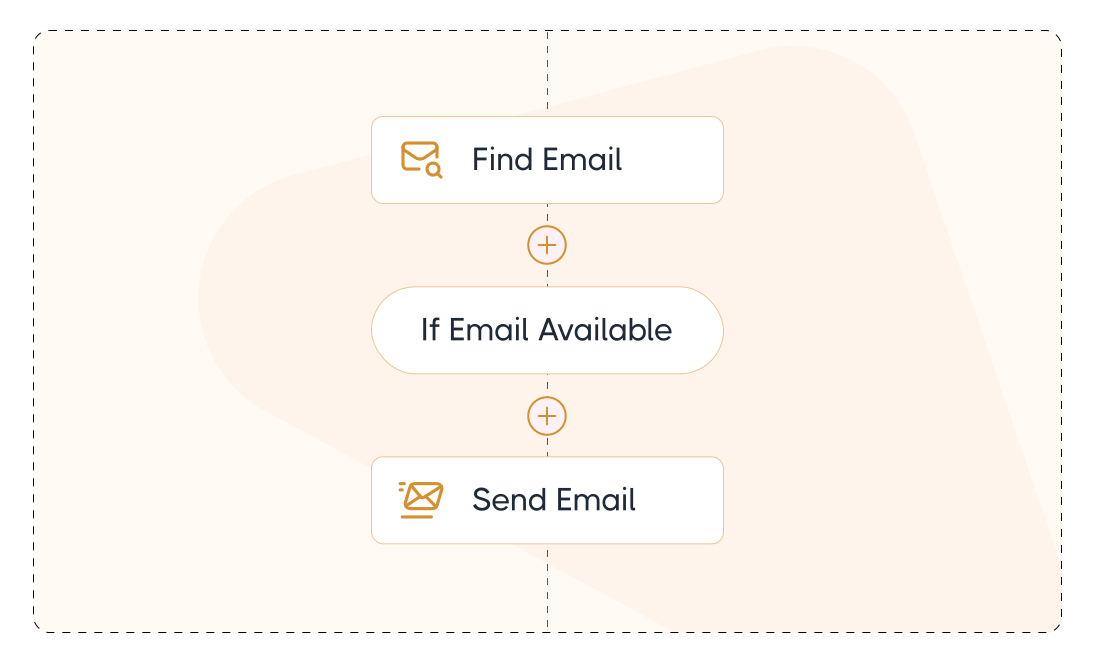
If an address is available, the prospect moves into the email path. If it isn’t, you can continue with another route instead of losing the lead altogether.

Use LinkedIn to Make Cold Email Feel Less Cold
That’s where Dripify beats email-only outreach platforms: your prospect’s first contact with your name doesn’t have to be an email.
Because Dripify combines LinkedIn automation and email in one sequence, you can create LinkedIn touchpoints before it: a profile visit, an endorsement, a connection request, a message, and so on.
Once you connect your Gmail or Outlook to Dripify, Send Email becomes just another action in that same workflow alongside LinkedIn actions.
Your sequence might look something like:
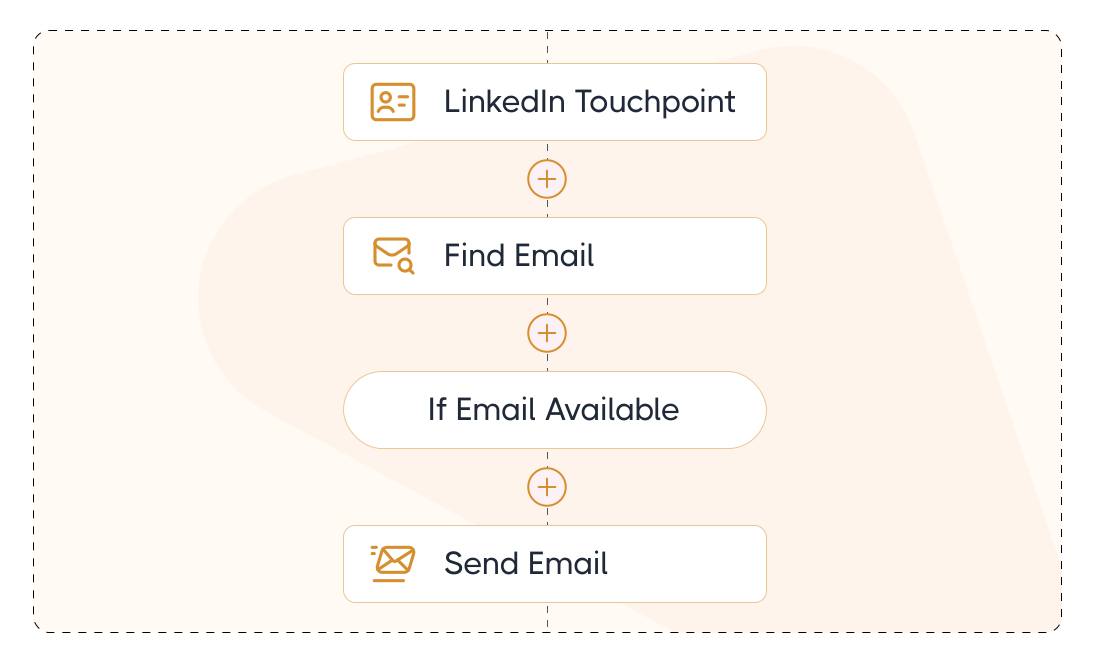
LinkedIn serves as a warm-up. Email is the step that creates a bond, as it arrives with some context instead of none. Technically, it’s still cold outreach, but it doesn’t feel that way to someone who has seen your name before.

Good to know:
Email remains the selling channel here; LinkedIn just gives Dripify a way to build context around it that a conventional cold-email platform can’t easily reproduce. And if LinkedIn isn’t part of your strategy; you’re not required to use it. Dripify supports email-only sequences too.
Keep Email Volume Under Control
Just because AI can make content generation faster doesn’t mean your sending volume should spike.
Dripify sets daily email limits at:
- 50 emails per day on Basic Plan
- 200 emails per day on Pro and Advanced Plans
Think of these as maximums, not numbers you need to hit.
Good to know:
If you’re using a new mailbox or domain, start with lower volumes and increase them gradually. Dripify sends emails through your own connected Gmail or Outlook mailbox, so your domain’s sending reputation still matters.
Protect Deliverability With Automatic Bounce Handling
Bad email data can quickly turn increased outreach volume into a deliverability problem.
Dripify helps reduce that risk at both ends of the campaign. Email addresses found through its Email Finder are verified before sending, and if an email does bounce, the platform detects it automatically.
Once an address has bounced, Dripify stops sending further emails to it instead of continuing with scheduled follow-ups.
Stop Selling When the Prospect Starts Talking
There’s nothing smart about sending a message that says, “Just bumping this to the top of your inbox” five minutes after someone has already responded.
Dripify detects email replies and automatically pauses that lead’s sequence, putting upcoming automated follow-ups on hold.
You can then take over the conversation yourself rather than letting automation keep talking for you.
Good to know:
Replies also feed into your campaign analytics, so you can see how email contributes to engagement and use that information when refining future campaigns.
How to Use AI to Write an Email for Marketing
Okay, by now you’re convinced you need AI email marketing software, but nobody hands you the instructions for “how to use AI to write an email for marketing” and sell more.
Analyze Customer Pain Points
Calls, support tickets, customer relationship management records, and comments from clientele should all be listened to. The next step is to feed that context to your AI email marketing tool so it can help shape outreach based on it.
Choose the Email Type
Choose the desired email format. Greetings or promotional messages? Maybe you need a re-engagement campaign, a sequence to follow up with customers who left their purchases, or something similar. Give it a thought.
Define Your Audience Segment
Which cluster of your audience do you want to target? Share this info with your AI because different segments require customized campaigns. The common categories include cold leads, warm prospects, loyal customers, past buyers, you name it.
Optimize Copy for Conversions
Ask your AI cold email automation tools to improve the content so it converts better; don’t use the initial copy it made. You can tell it to do things like make your calls to action stronger, simplify difficult words, inject urgency where it’s needed… literally anything!
Use a Clear Prompt Framework
It’s no secret that well-defined prompts produce better AI output, so consider using this framework:
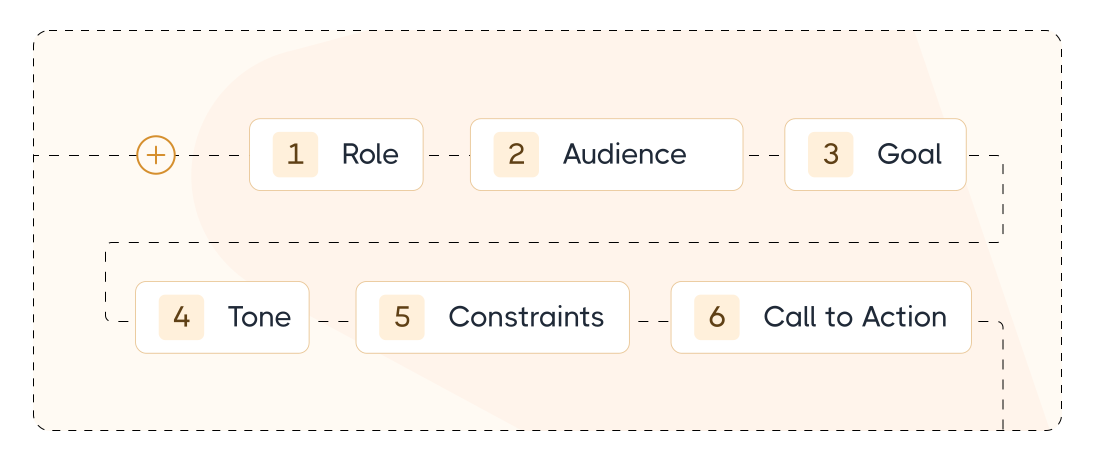
Example of what you could feed to AI:
“Hey, I need you to write a message based on the criteria below, including who I am, who I’m reaching out to, and what I want to achieve.
- Role: You’re a senior SaaS sales rep who knows how to write cold emails that start conversations, not pitches.
- Audience: Write to a CTO at a growing B2B SaaS company.
- Goal: Start a conversation about how automation could reduce the time their team spends on repetitive sales work and, if relevant, lead to a demo.
- Personalization: Use the prospect’s role, company, and one relevant detail I provide. Work it naturally into the opening instead of simply repeating their job title or company name.
- Tone: Direct, helpful, confident, and human. No hype, buzzwords, or exaggerated claims.
- Constraints: Keep it under 120 words. Use short sentences and plain English. Focus on time savings and workflow efficiency. Don’t use generic openings like “I hope you’re well.”
- CTA: End with one simple question about how their team currently handles this workflow.”
Add Product Details & Context
Your AI email marketing tool needs human input to learn about your pricing, promotions, due dates, and product changes; it cannot read minds.
Do not give it generalities like “our discount” or “the deadline.” Instead, give it details. With more specific instructions, it produces less vague results and spends less effort on details it has to guess.
Run a Readability Check
Before uploading materials to your AI email marketing tool, run them via a readability checker. Clumsy sentences and thick language are skimmed, not read. This step is especially important for AI drafts, which tend to over-explain and teach passively.
Schedule With AI Send-Time Optimization
Don’t just pick 9 a.m. and hope for the best. Let your tool plan the email instead; it evaluates each recipient’s historical open/click activity to anticipate their particular best-response window, rather than predicting one blanket time for your full list.
When AI-based Email Marketing Won’t Sell
Despite all its advantages, AI-based email marketing is not entirely foolproof. It won’t help you sell in the following cases:
When you automate without human oversight
Small errors, improper discount codes, mismatched names, and off-brand tone slip through at scale before anybody notices. Don’t just “click” a final approval; have a manual review phase, at least for the first several sends of any new sequence.
When your CRM data is outdated, incomplete, or wrong
AI doesn’t solve the problem; it just drags the mistake along if you don’t fix it first. Hyper-wrong is sending a hyper-personalized email connected to a previous role to a contact who left the post six months ago. Clean your data before you scale, not after you scale.
When you create too many micro-segments
Segment enough to be personalized, but not so much that your test data becomes noise. As a general tip, keep each segment large enough to achieve a few hundred sends before splitting it further. Anything smaller means you are testing on feels, not data.
Final Thoughts
The real advantage of AI-powered email marketing isn’t sending more emails. It’s cutting out the repetitive grind behind creating, testing, and running them.
Generative AI for email marketing alone gets you stronger subject lines, hooks, follow-ups, and alternative versions.
Tools like Dripify take it further: finding and verifying emails; personalizing with dynamic variables; formatting copy and attachments; building condition-based sequences; handling bounces; and keeping daily sending volumes safe, all in one workflow.
And if one channel isn’t enough, you’re not limited to it. With Dripify, you can bring LinkedIn into the mix to build familiarity before that email ever reaches the inbox.
Try Dripify for free today. Make AI work for conversations, not just copy.


![Best Chrome Extensions for LinkedIn Lead Generation 2026 [8 Lead-Hunting Picks Inside]](https://dripify.com/wp-content/uploads/2026/07/Best-Chrome-Extensions-for-Lead-Generation-on-LinkedIn-2026-1-png-1.avif)


Prospect and close deals at scale
Run your LinkedIn or email campaign today, see results in 48 hours.
Free 7-day trial included
Book a demo (for teams of 10+)