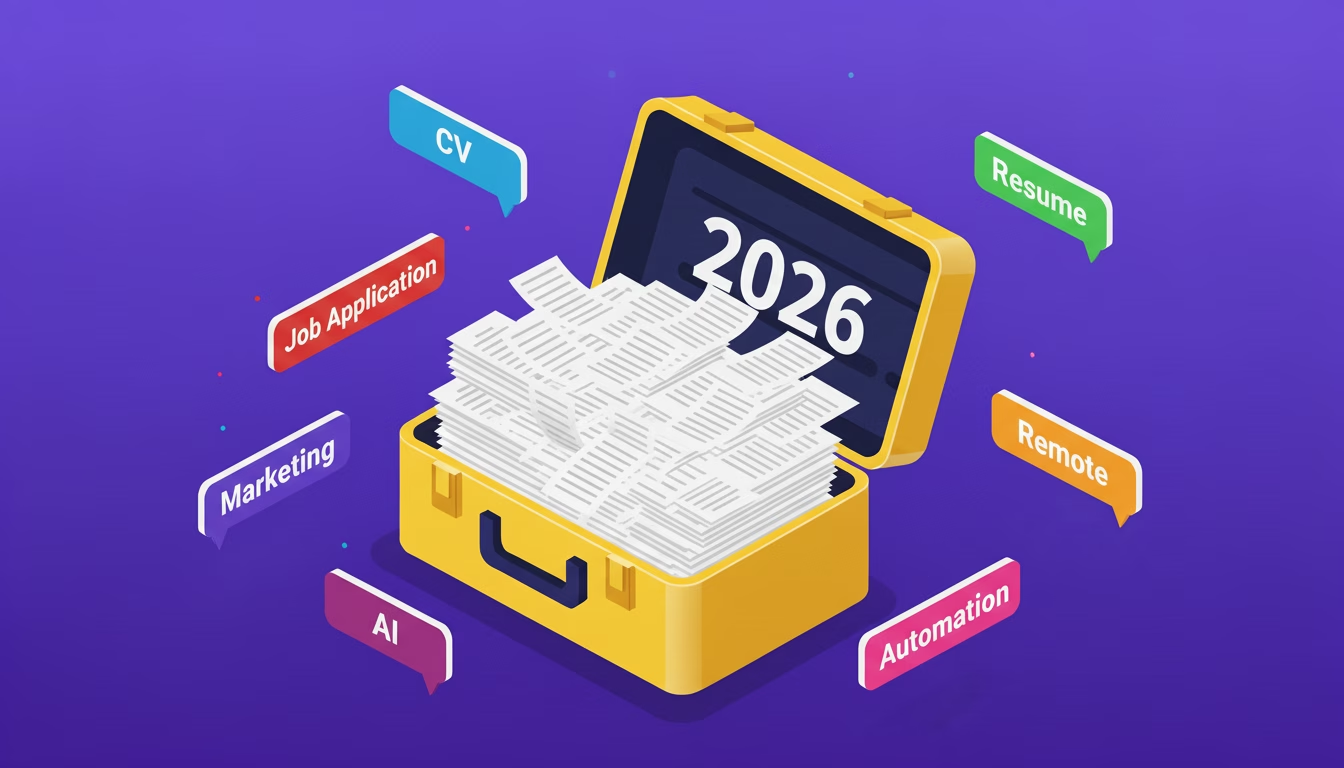
What’s Next for Marketing Jobs? The Complete Guide for 2026 and Beyond
| Getting your Trinity Audio player ready… |
2025 was a tough year for marketing professionals.
Budgets were slashed, teams were reduced, and growth targets remained unchanged. It felt like every time you scrolled through LinkedIn, there was news of layoffs or people taking a “career pause.”
While we can point fingers at economic factors and financial uncertainty, the deeper issue was something else entirely.
Everyone was eager to “leverage AI,” but very few understood how to implement it effectively. Teams started applying automation to every process, inadvertently swapping out strategy for software and creativity for mere prompts.
As we move into 2026, the dialogue has evolved. Instead of asking, “Will AI take over marketing jobs?” we’re now wondering, “Which marketers will adapt to using AI, and who will be left behind?”
We’ll explore the trends that are shaping the future of marketing roles, the growth of digital marketing careers, and the increasing prevalence of remote marketing positions. We’ll also cover how to stay ahead in a culture that values flexibility over job titles.
2025: The Year of Marketing FOMO
2025 was a tough year for marketing specialists. From entry level marketing jobs to senior digital marketing roles, thousands of professionals saw positions vanish overnight. There have never been so many LinkedIn posts from people who have been forced to quit, either through layoffs or by choice.
2025 will be remembered as the year of marketing FOMO, but not the fun kind — rather, the anxious and exhausting type.
Everyone was eager for AI, buzzing about automation, personalization, and data-driven creativity. Yet, few truly understood how to implement these concepts effectively.
Marketing teams hurried to incorporate “AI-powered” tools into every aspect of their work. Agencies underwent overnight rebranding, and job titles like Prompt Engineer and Automation Strategist emerged faster than recruiters could keep up.
However, beneath the surface excitement lay confusion, fatigue, and fear. It felt as if every marketer was racing against an unseen clock: adapt or risk being left behind. This urgency is what made 2025 such a challenging year for the industry. It wasn’t merely about layoffs or budget cuts; it was the pervasive uncertainty.
Entire departments were restructured to become “more AI-driven,” entry-level positions disappeared, and mid-level managers were urged to “rethink their value.” Even seasoned marketers began to question whether human creativity still held significance in an era dominated by instant automation.
While some professionals struggled to keep their heads above water, others found ways to thrive.
They didn’t chase every flashy new tool; instead, they learned to leverage the right ones. Their focus remained on what AI couldn’t replicate: strategic insight, empathy, brand storytelling, and genuine human connection.
As we step into 2026, the marketing job market appears both promising and unpredictable. The search volume for “marketing jobs” hovers around 30,000 per month, and interest in “digital marketing jobs” and “remote marketing jobs” continues to grow. Opportunities abound, but they are evolving at an unprecedented pace. So, the pressing question isn’t “Is marketing dying?” but rather “Who is steering it forward — humans or algorithms?”
Marketing careers aren’t fading away; they are transforming. What we’re witnessing is a fundamental shift in how marketing work is accomplished, particularly in areas like remote marketing and freelance digital marketing.

The 2025 Marketing Outlook in Numbers
To get a sense of where jobs in marketing are headed in 2026, we need to reflect on what 2025 showed us. (Spoiler alert: it wasn’t great.)
Data from major job boards and LinkedIn’s Global Workforce Report indicates that listings for digital marketing positions dropped by nearly 18% in the first half of the year. As a result, competition surged. For every open position, there were 3 to 5 qualified candidates, many of whom had recently been “AI-trained” or rebranded as automation experts.
But here’s the twist:
While automation was meant to streamline processes and cut costs, it also narrowed job descriptions. Companies began to combine content, SEO, paid media, and email into hybrid roles labeled “Growth” or “Full-Stack Marketing.” The new norm? Expect to be a strategist, copywriter, analyst, and automation expert all rolled into one.
However, not all job categories saw a reduction. Some areas actually grew. The demand for remote marketing jobs soared by over 25%, highlighting a global desire for flexibility. Hybrid and fully remote teams became the standard. Employers realized that skilled specialists don’t need to be within commuting distance of the office; they just need to communicate well and be proficient with the right tools.
On the flip side, entry level marketing jobs experienced the sharpest decline.
With fewer internships available, tighter budgets, and a growing dependence on AI, recent graduates found it harder to gain valuable experience. Many college students and new graduates began to wonder if pursuing a marketing degree was still a smart choice. Suddenly, it turned out that verifications in email marketing automation tools, analytics, or CRM systems proved to be more advantageous than four years of traditional education.
At the same time, new career paths began to open up. Freelancers offering digital marketing services experienced an unprecedented surge in demand, as agencies reduced their staff and companies sought out flexible specialists. The gig economy enabled marketers to build personal brands, consult for startups, and earn competitive rates, often matching or surpassing the salaries of full-time jobs in digital marketing.
Consulting also saw a resurgence. A person working as an independent marketing consultant positioned themselves as strategic partner rather than mere executor, assisting overwhelmed founders and sales teams in navigating the transition to AI. They became the link between automation and human insight, demonstrating that strategy, empathy, and experience still hold significant value.
In summary, 2025 transformed the entire sector of marketing employment. The traditional hierarchy (intern → specialist → manager → director) broke down into a dynamic ecosystem of hybrids, consultants, and tech-savvy generalists.
Here’s what the “new marketing normal” looks like as we head into 2026:
- Companies are hiring fewer people but expect greater versatility.
- Professionals are redefining success based on skills rather than titles.
- The job market now rewards agility, data literacy, and emotional intelligence over years of experience.
The Rise (and Reality) of AI-Driven Marketing Roles
If 2024 was the year marketers began to explore AI, then 2025 became the year everyone jumped on the bandwagon, often without a solid strategy in place.
Terms like AI-generated content, automated outreach, and predictive analytics flooded job listings, webinars, and LinkedIn feeds. It seemed like every company was on the hunt for “AI-savvy” candidates, and marketers were racing to demonstrate their skills in crafting prompts better than their peers.
However, as the excitement faded, one stark reality emerged: the future of marketing jobs isn’t just about knowing how to use AI; it’s about understanding where to apply it effectively.
The FOMO Effect
The primary hurdle in 2025 wasn’t the technology itself; it was the fear of missing out.
This FOMO drove companies to adopt new tools without fully grasping their significance or return on investment. Each week introduced another “game-changing” AI platform, another feature update claiming to “transform” outreach marketing, and yet another email promising tenfold productivity.
In this frenzy, many marketing specialists and teams lost sight of the basics. Campaigns became louder but not necessarily smarter. Blog posts started to sound repetitive, and outreach messages merged into a monotonous blend of robotic language and recycled phrases. Even the most well-meaning automation made brands feel less relatable.
Ironically, the marketers who succeeded weren’t those chasing the latest AI trends, but those who figured out how to combine automation with genuine human connection.
The Human-AI Balance
While AI can analyze, predict, and even generate content, it lacks the ability to empathize.
Marketers who built lasting careers in 2025 recognized this truth. They utilized AI to enhance their work rather than replace it. For instance:
- Freelance digital marketing specialists harnessed AI tools to streamline reporting and keyword research, allowing them more time for creative strategy.
- Marketing consultants employed automation for data collection while ensuring client communications remained deeply personalized.
- Teams managing remote marketing roles relied on AI for scheduling and analytics, but still emphasized the importance of human storytelling.
In short, the most prolific marketers used AI as a co-pilot, not a substitute.
The New Roles Emerging
As AI becomes more integrated into marketing operations, new job titles are emerging. Roles like “AI Content Strategist,” “Prompt Engineer,” and “Marketing Automation Architect” are now part of the expanding range of digital professions. While these titles may seem futuristic, they are quickly becoming standard in larger SaaS companies and agencies.
What’s driving this change?
Companies have come to realize that they need more than just content creators; they require “system thinkers.” These are individuals who grasp the connection between data, messaging, and the medium used. They can create scalable workflows that encompass CRM, automation, and content distribution.
And the compensation for these roles is impressive. Senior professionals focused on automation in digital marketing are now earning more than traditional marketing managers in many regions. At the same time, entry-level marketers are increasingly pursuing internships or apprenticeships that incorporate AI tools into their daily tasks, giving them a significant advantage as they prepare for marketing careers in 2026 and beyond.
The Shift in Education
Even educational institutions are adapting. Universities that offer marketing degrees are re-evaluating their programs to include courses on machine learning, data literacy, and ethical automation. However, traditional curricula are still lagging, leaving many graduates ill-equipped for the hybrid skills that employers are now seeking.
This gap has led to a surge in alternative education options, such as bootcamps, certifications, and on-demand courses, which gained significant popularity in 2025. The new pipeline of marketing talent is largely self-taught, driven by tools, and entrepreneurial in spirit.
Marketers are no longer waiting for companies to provide training; they are actively building their careers, project by project and client by client.
Whether you’re just starting out after a marketing internship or have a few years of experience, the expectations have evolved. Employers are now looking for hybrid marketers — individuals who can create campaigns, analyze data, and automate outreach.
What Marketers Learned the Hard Way in 2025
If there was a theme for the marketing world in 2025, it would be “adapt or fade away.” It was a year of reckoning, where teams came to understand that technology alone doesn’t guarantee growth; the human touch in marketing is still crucial for success.
The Layoff Wave
Many professionals in digital marketing faced this reality head-on. As budgets tightened, AI tools seemed like a quick solution. Marketing teams were downsized, and companies mistakenly believed that automation could replace strategic thinking.
Consequently, countless talented specialists, from entry-level marketers to senior strategists, found themselves scrolling through LinkedIn, seeing layoff announcements and #OpentoWork posts.
But here’s the twist: some of those marketers returned stronger than ever. How? They adapted.
They embraced automation, data analytics, and prompt engineering. Some ventured out on their own, starting freelance digital marketing consultancies, while others joined early-stage startups eager for agile, tech-savvy talent. A new mindset took hold: the most secure marketing job is the one you create for yourself.
The Rise of the “Tech-Creative”
In 2025, the lines between creativity and technology became increasingly blurred. The most successful marketers were those who could craft a compelling headline while also understanding automation workflows. They didn’t just use tools like Dripify or HubSpot; they optimized them, transforming outreach into a measurable growth engine.
This new hybrid role emerged: part creative, part engineer. While traditional agencies struggled to keep up, tech-oriented marketers flourished, leveraging AI to scale their creativity.
For example:
- Marketing consultants started blending storytelling with automation, leading to quicker results for their clients.
- Specialists with digital marketing degrees began to enhance their resumes with skills in “AI literacy” and “workflow automation.”
- Marketing internships began to include fundamentals of AI and automation, highlighting the rapid evolution of the industry.
Remote Work as The Default
Automation tools simplified the management of campaigns for distributed teams, allowing them to maintain productivity across different time zones. This global reach also changed; a marketer in Lisbon could easily compete with one in New York or Singapore. As a result, professionals needed to stand out not just by their location or availability, but by the depth of their expertise and personal branding.
The key takeaway? The future favors the most adaptable marketing teams, not necessarily the largest.
The Emotional Cost of FOMO
2025 also brought an emotional challenge. Many marketers felt overwhelmed by the relentless need to “keep up.” Each week introduced a new tool, a new algorithm update, and a new reason to feel behind. Ironically, those who managed to stay grounded were not the ones chasing every trend, but rather those who focused on mastering a few key areas.
Instead of subscribing to every AI tool, they chose one and learned it thoroughly. Rather than writing countless prompts, they learned to communicate with AI with empathy and clarity. Those who took the time to think, reflect, and refine their approach ended up achieving the most.
The marketers who thrived during the 2025 wave didn’t just work harder; they worked smarter by leveraging Dripify automation tools and AI copy generators, which enabled freelancers and small teams to handle tasks that once required entire departments.
2026: The Year of Humanized Automation
If 2025 was all about pursuing automation, 2026 is set to focus on making it more human-centric. The marketers who will truly shine this year won’t be those who simply utilize the most tools, but rather those who apply them with intention.
From “Doing More” to “Doing It Better”
The outdated mentality of “scale at any cost” is rapidly becoming obsolete. Instead of bombarding audiences with 10,000 automated messages, savvy marketers are prioritizing a handful of meaningful conversations that genuinely lead to conversions.
This transformation is reshaping marketing careers everywhere. Recruiters are now seeking specialists who view digital marketing not merely as a numbers game, but as one rooted in empathy.
The most sought-after professionals are those who blend automation with a human touch, knowing precisely when to hold back on automation. This transition from mechanical to mindful marketing is truly impactful.
AI as a Teammate, Not a Threat
The anxiety surrounding “AI will take my job” is gradually being replaced by a more constructive question: “How can AI enhance my work?”
AI is increasingly seen not as a competitor, but as a partner. It takes care of the monotonous aspects of research, reporting, and outreach, allowing marketers to concentrate on creativity, storytelling, and strategy. In essence, the tools are finally aligning with the needs of the people.
For instance, freelance digital marketing experts are now creating comprehensive content systems powered by AI, from automated post scheduling to real-time A/B testing of messages. Marketing consultants leverage AI-driven analytics to provide measurable ROI more swiftly than ever. Teams managing remote marketing roles now utilize shared dashboards, enabling them to view live campaign results without unnecessary back-and-forth communication.
In 2026, the focus isn’t solely on automation; it’s on the human element behind it.
Skills That Define the New Marketer
As automation takes over routine tasks, employers are increasingly looking for something less tangible: judgment. This shift is driving up the importance of skills like empathy, adaptability, and ethical decision-making. Here are some key skill sets that are shaping the future of digital marketing roles:
- AI prompt strategy: Crafting and fine-tuning AI inputs to create content that aligns with brand values.
- Creative automation: Leveraging AI to enhance design and storytelling while maintaining authenticity.
- Data translation: Converting analytics into actionable insights for marketing campaigns.
- Human psychology: Grasping the emotional triggers and behavioral patterns that influence clicks and conversions.
While a marketing degree remains valuable, the future will favor those who complement their education with practical experience, curiosity, and a readiness to discard outdated methods.
The New Salary Reality
As the demand for hybrid skill sets grows, we’re witnessing significant changes in highest paying marketing jobs. Marketers who can utilize tools like Jasper, ChatGPT, or Dripify to boost their productivity are earning 20–30% more than their traditional peers.
New roles such as Marketing Automation Specialist, AI Content Strategist, and Customer Journey Architect are emerging across various sectors.
Even entry level marketing jobs are evolving; interns are now expected to be familiar with not just Canva or Google Analytics, but also prompt engineering and the basics of workflow automation.
| Role | Why It’s Growing | Average Salary (US) |
|---|---|---|
| Digital Marketing Manager | Cross-channel strategy + automation | $70K–$110K |
| Marketing Consultant | Flexible, AI-enabled project work | $60K–$120K |
| Content Operations Manager | Systems + storytelling | $65K–$100K |
| Marketing Data Analyst | Demand for measurable ROI | $80K–$120K |
| Entry-Level Digital Marketer | On-ramp for hybrid skillsets | $45K–$65K |
This shift is flattening the conventional career ladder, allowing ambitious newcomers to advance quickly if they possess the right tech skills and curiosity.
A Freelance Revolution
An increasing number of marketers are choosing to work independently. The rise of remote work infrastructure, automation tools, and the creator economy has made freelance digital marketing one of the fastest-growing career paths in 2026.
These freelancers are not merely filling roles; they are establishing personal brands, launching specialized agencies, and managing clients on a global scale.

The New Skill Set: How to Future-Proof Your Marketing Career
By 2026, success in marketing will be measured not by job titles or team sizes, but by the impact you create. Whether you’re a marketing consultant, freelancer, or working in-house, the key question is: Can you drive results faster than your competitors and prove it?
Metrics That Actually Matter
The days of relying on “reach” or “engagement” to impress hiring managers are over. Nowadays, even entry-level marketing positions require you to demonstrate real outcomes, such as pipeline growth, lead quality, customer lifetime value, and conversion rates.
This shift towards data-driven results is changing how marketers define success. Instead of saying, “I managed five campaigns,” the narrative has evolved to, “My campaigns achieved a 32% increase in qualified leads over two quarters.” Those who can connect their creative efforts to revenue and support it with performance data are leading the new wave of digital marketing roles.
Remote by Default, Global by Design
The world after 2025 has fully embraced remote work. Companies looking to fill remote marketing positions view geography as an asset rather than a limitation. A team could have a strategist in Berlin, a copywriter in Buenos Aires, and a media buyer in Bangkok, all collaborating effortlessly within the same digital framework.
This global transition has led to two significant changes:
- Expanded opportunities. Skilled marketers from emerging markets are now competing directly with professionals from established regions.
- Increased expectations. With a broader talent pool, competition is fiercer, deadlines are tighter, and communication standards are higher than ever.
In this environment, clarity, independence, and self-management are just as crucial as technical skills.
The Rise of the Portfolio Career
By 2026, a growing number of marketers are opting to build diverse careers instead of sticking to a single corporate route. You might find yourself working full-time as a marketing consultant, freelancing on weekends, and even running your own digital course.
This combination of roles is often referred to as a “portfolio career.” It enables marketers to create multiple income sources and develop resilience in an unpredictable job market.
This shift is also influencing what recruiters prioritize. Rather than focusing solely on long job tenures, they now appreciate a wide array of experiences across different industries, formats, and technologies. Being a generalist with strong skills in areas like automation, AI, or storytelling can often give you an edge over someone who has remained in one niche for too long.
Internships that Build Futures
For those just starting out, marketing internships are changing as well. Instead of merely handling basic administrative tasks, today’s interns are given real responsibilities for campaigns. They manage email workflows, oversee content calendars, and test advertising creatives.
Innovative companies are using internships not just to fill short-term positions, but to cultivate their future experts. The best marketing internships now offer mentoring, access to automation tools, and insights into cross-channel analytics, providing new graduates with experiences that were once only available to mid-level professionals.
When Job Titles Mean Less, and Outcomes Mean Everything
In 2026, job titles began to lose their distinctiveness. You might encounter roles like “Growth Architect,” “Content Automation Strategist,” or “Audience Intelligence Lead.” Beneath these eye-catching titles lies a common expectation: be measurable, be creative, and be quick.
For those seeking digital marketing positions, this translates to one key takeaway: adaptability is the new form of job security. The ability to learn new tools, switch between campaigns, and stay ahead of lead generation marketing trends is what distinguishes a successful marketer from one who becomes outdated.
Why Soft Skills Still Win
Ironically, as automation spreads, the traits that can’t be automated have become the most valuable.
Empathy. Storytelling. Emotional intelligence. The marketers who know how to make people feel something (rather than just click something!) are the ones employers fight for.
It’s a reminder that no matter how advanced the tools become, marketing will always be about humans first.
Whether you’re applying for remote marketing jobs or eyeing your first digital marketing internship, learning to automate, analyze, and adapt is the fastest way to stay relevant.
How to Succeed in the 2026 Marketing: 6 Practical Tips
If 2025 was marked by uncertainty and job losses, 2026 is all about transformation.
The marketers who are thriving today may not be the most seasoned, but they are certainly the most adaptable. They have mastered the art of combining creativity with data, intuition with automation, and storytelling with measurable results.
Here’s how to secure your future in the ever-changing marketing job market of 2026.
1. Embrace AI as a Partner, Not an Adversary
AI hasn’t taken over marketing jobs; it has replaced those who failed to evolve. The successful digital marketers of today know how to leverage automation effectively:
- Use it to analyze your audience, not to craft entire campaigns.
- Use it to streamline processes, not to replace human empathy.
- Use it to gain insights, not to stifle curiosity.
For example, a freelance digital marketing expert might utilize AI to segment audiences and optimize ad timing, but the emotional connection — the “why” behind the message — still comes from human insight.
The toolkit of the future marketer is a blend of technology and creativity. Those who can effectively prompt AI, assess its outputs, and layer automation on top of their creative ideas will remain indispensable.
2. Create a Personal Brand That Draws Opportunities
In a crowded market, visibility is key to unlocking opportunities.
Amidst a flood of generic LinkedIn posts and recycled content, having a distinct voice is crucial. Think of yourself as your own brand.
A strong personal brand accomplishes three things:
- It builds trust. Employers and clients view you as credible even before they see your resume.
- It establishes authority. You become more than just another candidate; you emerge as a thought leader.
- It generates inbound interest. Projects, partnerships, and remote marketing roles will start coming your way.
Don’t shy away from sharing case studies, campaign analyses, or personal insights from your failures.
Remember, consistency is more important than perfection. By documenting your journey, you transform experience into expertise, and expertise into opportunity.
3. Embrace Cross-Channel Thinking
By 2026, marketing channels will no longer operate in silos. LinkedIn will link to email, emails will trigger retargeting efforts, and retargeting will fuel nurturing campaigns. Everything will be interconnected.
The most successful marketers will be those who can visualize the entire customer journey, rather than just their segment. This is why even entry level marketing jobs today require skills like “Understanding of omnichannel funnels” or “Experience with marketing automation systems.”
To differentiate yourself, strive for what’s known as “T-shaped” expertise, which combines a broad knowledge of various channels with deep expertise in at least one area. This blend will make you both versatile and sought after.
4. Opt for Roles That Enhance Transferable Skills
The greatest career blunder? Pursuing job titles over skills that can be applied in various contexts.
When faced with job offers, choose the one that hones your strategic thinking or enhances your technical skills. A marketing consultant who excels in both storytelling and CRM automation will always have an edge over someone confined to a single area of expertise. Focus on growth rather than comfort. Your career trajectory in 2026 should feel a bit challenging; that’s a sign it’s pushing you to grow.
5. Leverage Your Expertise Beyond Just Time
A significant trend in marketing careers by 2026 is the emergence of independent creators and consultants. Rather than climbing the corporate ladder, many marketers are establishing their own platforms: newsletters, online courses, templates, consulting services, and more.
If you have a specific niche (be it freelance digital marketing, community building, or AI content strategy), there’s a market ready to invest in your knowledge. The crucial point is to think beyond just billable hours.
Your expertise is a valuable asset; treat it as such.
6. Keep Learning Even When You Think You’re Ahead
In today’s world, education in marketing has shifted from being a “nice-to-have” to an essential necessity. While having a marketing degree still holds value, what really counts is your capacity to learn quickly.
The tools, algorithms, and strategies are constantly evolving. That’s why leading marketers dedicate part of their week to micro-learning. They try out new automation tools, engage with professional communities, or follow niche thought leaders.
The most successful individuals in digital marketing today are those who continually ask themselves, “What else do I need to learn?”
The Bottom Line: From FOMO to Focus
The marketing is evolving at an unprecedented pace, but it’s not all negative. Those who can strike a balance between automation and authenticity will discover more opportunities rather than fewer.
Whether you’re starting out in an entry-level marketing position, looking into internships, or advancing as a freelance digital marketing professional, keep this in mind: automation is only as effective as the person steering it.
So, remain curious. Stay creative. Experiment with new tools. The future of marketing jobs should not be feared but embraced. The year 2025 taught marketers a crucial lesson: fear does not foster resilience. The frantic pursuit of the latest AI gimmick or impressive title has left many feeling exhausted and uncertain.
In 2026, it’s time to take a step back, reassess, and concentrate on the basics: storytelling, building relationships, understanding data, and being adaptable. The future of marketing careers isn’t about mastering every emerging trend; it’s about mastering how to respond to change.
So, whether you’re looking into remote marketing positions, aiming for a higher digital marketing salary, or considering your next role as a marketing consultant, remember: the tools will change, the platforms will evolve, but marketers who continue to learn, maintain their humanity, and act with intention will always be sought after.
For those clinging to outdated practices, stagnation is a real threat. However, for anyone willing to enhance their skills — whether they are freelance digital marketers or experienced marketing consultants — the next wave of growth is already upon us.
Frequently Asked Questions
Let’s check your understanding of the lesson.
The events of 2025 drastically transformed the way marketing teams function. From the CMO’s office to entry-level positions, every role experienced three significant changes:
1. Automation Became Essential
What was once considered “cutting-edge” — like automated email sequences, advanced CRM workflows, or predictive analytics — became the norm. If your team wasn’t embracing automation by 2025, you were already falling behind.
2. Results Took Precedence Over Titles
By 2026, job titles held little significance. You weren’t hired just because you were a “Digital Marketing Manager.” You were brought on board for your ability to generate leads, enhance conversion rates, or deliver measurable ROI.
3. Remote Work Became the Standard
Remote marketing positions are now the norm. Global hiring has opened up opportunities for talent around the world, but it has also intensified competition. Suddenly, a marketer in Kyiv or Nairobi could directly compete with one in New York — and succeed.
Marketing has become increasingly specialized. However, some roles are standing out as both resilient and profitable. Here are the positions expected to see the most growth:
- Marketing Automation Specialist. With the rise of AI tools, there is a growing need for specialists who can integrate platforms like HubSpot, Salesforce, and Dripify.
- Content Strategist. While AI can generate text, it lacks the ability to create a comprehensive strategy. Skills in planning and storytelling remain distinctly human.
- Growth Marketer / Demand Generation Manager. These positions blend creativity with data analysis to drive revenue directly.
- Freelance Digital Marketing Consultant. The gig economy is booming, and businesses are turning to skilled consultants who offer flexibility.
SEO & Performance Marketer. Search continues to be a high-return channel, particularly in the B2B sector.
Salary growth in the marketing industry has been inconsistent, influenced by skills and specialization.
Here’s the average annual salary (USD) for marketing roles:
- Entry-Level Marketing Assistant: $45,000–$55,000 per year;
- Digital Marketing Specialist: $65,000–$85,000 per year;
- Marketing Automation Manager: $90,000–$120,000 per year;
- Growth / Demand Generation Lead: $100,000–$130,000 per year;
- Marketing Consultant (Freelance): $70–$150 per hour.
Key takeaway: AI tools aren’t making marketers cheaper. They’re actually increasing the value of skilled marketers. If you can handle automation platforms, analyze results, and optimize for conversions, your worth is higher than ever.
Absolutely! Marketing degree is worth it. But only if you see it as a starting point rather than an endpoint.
A marketing degree provides foundational theory, but the industry is changing too rapidly for traditional education to keep pace.
Hiring managers are now seeking a mix of credentials and tangible proof, e.g., portfolios, projects, certifications, and measurable results. Pro tip: Combine your degree with certifications in digital marketing, analytics, and automation (like HubSpot, Google, or Dripify Academy). That’s the combination that stands out.
1. Cultivate a Learning Habit
Make learning a part of your job description. Take at least one course each quarter — whether in automation, analytics, or storytelling. The aim isn’t to become an expert in everything, but to ensure you never become obsolete.
2. Master Automation While Keeping Authenticity
Learn to use automation tools without sounding robotic. Personalization at scale — rather than mass messaging — will set the winners apart in 2026.
3. Document and Share Your Achievements
Maintain a “proof of impact” folder. Screenshots, reports, campaign metrics — keep it all. This will make your next job interview significantly easier.
4. Network Intelligently
Engage in online communities, participate in discussions, and stay visible. In a world of remote marketing jobs, visibility is a valuable asset.
5. Develop a Personal Brand
Your online presence has become your resume. Publishing thought pieces, LinkedIn posts, or brief guides demonstrates credibility. Employers are looking for evidence that you can communicate ideas clearly and persuasively.
Not every marketing position will come through the automation wave unscathed. Here are a few that are already undergoing significant changes:
- Basic Copywriting. AI is now capable of handling initial drafts and repurposing content.
- Manual Outreach or Lead Sourcing. Dripify sales automation software minimizing the need for manual prospecting.
- Social Media Scheduling. Fully automated systems are taking over the repetitive task of posting.
This doesn’t mean these roles will disappear entirely — rather, they will evolve. Marketers who shift from being “doers” to becoming “strategists” will find success.
Read next
LinkedIn Call to Action for Lead Generation
LinkedIn has always been at the forefront of introducing new and exciting features to help businesses make the best use…
![Email Outreach Tracking [Tips, Tricks and Tools]](https://dripify.com/wp-content/uploads/2025/02/11-7-png.avif)
Email Outreach Tracking [Tips, Tricks and Tools]
Email outreach is one of the most effective and affordable marketing tools available to reach your target customers. As a marketer,…
![Create a Prospecting Plan [+8 Prospecting Methods]](https://dripify.com/wp-content/uploads/2025/02/11-png.avif)
Create a Prospecting Plan [+8 Prospecting Methods]
No matter your business, you need a steady flow of new prospects for a steady revenue stream. Prospecting is time-intensive…
LinkedIn InMail vs Email Comparison
Whether to use LinkedIn InMail or cold email if you want to contact a potential employer, client, or networking prospect?…
Top 8 Social Media Strategy Podcasts to Check Out
It’s no secret that social media is a vital aspect of building a successful brand in today’s digital world. From…
How to Write a Great Email Signature with Examples
As an email marketer or sales professional, you know the importance of leaving a lasting impression on your audience. But…
Prospect and close deals at scale
Run your LinkedIn or email campaign today, see results in 48 hours.
Free 7-day trial included
Book a demo (for teams of 10+)